
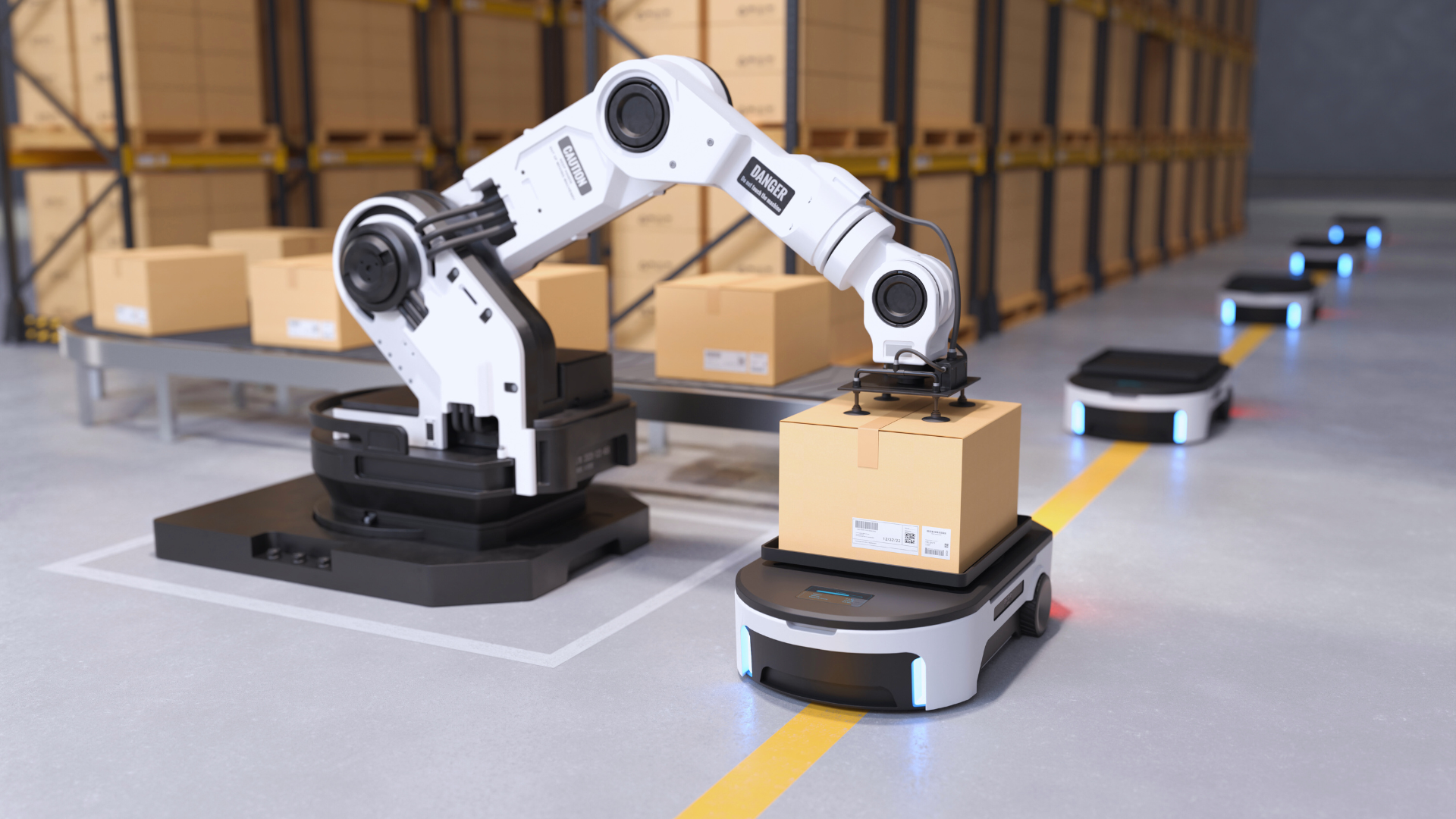
The landscape of scientific research is evolving rapidly, driven by advancements in autonomous robot technology. These robots are increasingly capable of performing complex tasks, from data collection to experimentation, in ways that were previously unimaginable for human researchers. Their potential to enhance accuracy and efficiency in scientific fields can revolutionize how experiments are conducted and new discoveries are made.
As autonomous robots integrate into various scientific disciplines, they open up new frontiers for exploration. In environments where human presence is challenging or dangerous, such as deep-sea or outer space research, these machines can gather invaluable data without jeopardizing human safety.
The ramifications of this technology extend beyond mere convenience; they promise to accelerate breakthroughs in areas like medicine, environmental science, and materials engineering. Researchers are beginning to realize that leveraging these robots may lead to advancements at an unprecedented pace.
Foundations of Autonomous Robotics
Autonomous robotics relies on several key technologies that work together to create intelligent and adaptable machines. These include advancements in artificial intelligence, machine learning, and sophisticated sensing mechanisms.
Core Technologies: AI, Machine Learning, and Sensing
Artificial intelligence (AI) serves as the backbone of autonomous robotics, enabling machines to process data and make informed decisions.
Machine learning algorithms, such as supervised learning and reinforcement learning, enhance AI capabilities by allowing robots to learn from experience and improve over time.
Sensing technologies are also crucial. They provide real-time data about the environment through various sensors, including cameras for computer vision and LIDAR for distance measuring. The integration of these technologies enables robots to interpret complex data and respond effectively.
Autonomy and Decision-Making Capabilities
Autonomous robots utilize advanced decision-making frameworks to operate independently in dynamic environments.
They analyze data from sensors and apply AI techniques to evaluate potential actions based on context. This requires robust algorithms capable of making rapid assessments and selecting optimal strategies.
Cognition plays a role in enhancing autonomy. Robots use cognitive computing to simulate human-like reasoning, which aids in understanding complex scenarios. This level of autonomy is essential for performing intricate tasks in scientific research.
Navigation and Perception Mechanisms
Effective navigation and perception are vital for the operation of autonomous robots. These systems work in tandem to ensure accurate localization and movement through various environments.
Navigation involves mapping and trajectory planning, allowing robots to chart courses and avoid obstacles. Techniques like sensor fusion combine data from multiple sensors, enhancing accuracy.
Perception mechanisms rely on computer vision and object recognition. These methods enable robots to identify and interact with different objects and conditions in their surroundings. Together, these capabilities ensure that autonomous robots can navigate and adapt to new challenges effortlessly.
Applications of Autonomous Robots in Scientific Research
Autonomous robots are increasingly transforming various scientific domains, enabling precision, efficiency, and innovative approaches. These applications extend across healthcare, space exploration, materials science, and agricultural monitoring, showcasing the versatility and potential of robotic technology.
Healthcare and Biomedical Innovation
In healthcare, autonomous robots have found applications in surgical procedures. Surgical robots enhance precision during operations, allowing for minimally invasive techniques. These systems can improve outcomes and reduce recovery times.
Robotic prosthetics and exoskeletons assist individuals with mobility impairments. They provide support and enable improvements in quality of life through advanced control systems, adapting to user movements in real-time.
Research is also underway to develop robots that conduct drug discovery and testing. Their ability to perform precise experiments in controlled environments accelerates the process, leading to faster scientific breakthroughs.
Space Exploration and Planetary Science
NASA utilizes autonomous robots like the Perseverance Rover to explore Martian terrain. Equipped with sophisticated sensors and AI, these rovers analyze soil samples and collect data in unstructured environments.
These robots perform complex tasks such as autonomous navigation and problem-solving. By operating independently, they contribute to scientific discovery without requiring constant human oversight.
The information gathered helps scientists understand planetary conditions and make informed decisions about future missions. These robots are essential for exploring places that are otherwise inaccessible or hazardous for humans.
Materials Science and Advanced Experimentation
In materials science, autonomous robots facilitate the creation of innovative materials through precise experimentation. They enable researchers to carry out high-throughput testing, rapidly identifying properties of different compounds.
Robots can synthesize and analyze materials at scales that are difficult for human researchers. This leads to quicker advancements in fields such as nanotechnology and metallurgy.
Advanced robotics also enhances the monitoring of experiments, collecting real-time data for analysis. This level of precision allows for the development of stronger, lighter, and more durable materials.
Agricultural and Environmental Monitoring
Autonomous robots play a crucial role in agricultural practices. Agricultural robots can monitor crop health and optimize resource use, significantly increasing efficiency and yield.
Drones equipped with imaging capabilities provide insights into soil conditions and plant growth. These insights assist in making informed decisions regarding irrigation and pest control.
Environmental monitoring also benefits from robotic technology. Mobile robots can traverse dynamic environments to collect data, contributing to research in areas like climate change and biodiversity conservation.
Industry Impacts and Human-Robot Collaboration
The integration of autonomous robots into various industries significantly transforms operational efficiency and fosters robust human-robot collaboration. This evolution is evident in automation systems and collaborative workflows that enhance productivity and flexibility.
Industrial Robotics and Automation Systems
Industrial robots are pivotal in modern manufacturing processes, driving the shift toward automation. These machines execute tasks such as welding, painting, and assembly with high precision and speed. Advanced automation systems now incorporate artificial intelligence, enabling real-time decision-making.
Scalability remains a key advantage, allowing businesses to adjust production volumes rapidly. By implementing automated assembly lines, companies reduce labor costs while improving product consistency. Additionally, data collected through automation systems enhances predictive maintenance, minimizing downtime and operational disruptions, which improves overall efficiency.
Collaborative Robots and Human-Robot Interaction
Collaborative robots, or cobots, are specifically designed to work alongside humans. Their user-friendly interfaces and safety features allow for seamless interaction. Cobots can perform repetitive tasks, freeing human workers to focus on complex and creative activities.
This synergy enhances productivity and safety in workplaces. Human-robot interaction is refined through sensors and machine learning, allowing cobots to adapt to changing environments and tasks. Companies leveraging collaborative robotics report improved employee satisfaction as workers engage in more meaningful work rather than monotonous functions.
Autonomous Logistics and IoT Integration
Autonomous logistics involves using robots and automated systems in supply chain management. With Internet of Things (IoT) integration, these systems communicate with each other to optimize inventory management and delivery processes. Autonomous mobile robots can navigate warehouses efficiently, locating and transporting goods without human intervention.
Cloud computing plays a crucial role in managing the vast data generated by these systems. Companies can analyze real-time data to make informed decisions about logistics strategies. This interconnectedness enhances transparency and traceability in supply chains, allowing organizations to respond swiftly to consumer demands or supply chain disruptions.
Ethical and Societal Considerations for the Future
As autonomous robots integrate more into scientific fields, several key ethical and societal considerations emerge. These include the imperative for safety and reliability, the impact on the workforce, and the need for robust ethical guidelines.
Safety and Reliability in Scientific Settings
Ensuring safety and reliability is paramount in environments where autonomous robots operate. These robots must undergo rigorous testing to meet engineering standards that account for potential malfunctions.
Protocols should be developed to address failures, ensuring that robots can operate without endangering human workers or sensitive experiments.
Incorporating advanced materials can enhance the durability and functionality of these robots. Furthermore, integrating large language models (LLMs) can improve communication between robots and human operators, fostering a safer work environment.
Impact on Workforce and Job Displacement
The introduction of autonomous robots is likely to alter job landscapes across scientific sectors. While these technologies can increase efficiency, they also raise concerns about job displacement.
Routine tasks previously performed by humans may become automated, affecting job security for some workers.
To mitigate these impacts, reskilling programs should be implemented to prepare the workforce for new roles that require human oversight and collaboration with robots. Emphasizing the need for adaptability will be crucial as these technologies evolve.
Ethical Guidelines and Regulatory Challenges
The rapid advancement of autonomous robots necessitates clear ethical guidelines. Developers and researchers must consider the moral implications of deploying these technologies.
Establishing a framework of ethical considerations will help in addressing issues related to safety, responsibility, and accountability.
Regulatory challenges may arise as lawmakers seek to keep pace with technological innovations. Collaborations between ethics boards, engineers, and legal experts can aid in crafting effective regulations that promote safe and responsible use of autonomous robots in scientific fields.